A Girl Showing Her Backside Drawing With a Cool Background
For this tutorial, we are going to create a scene of building and a couple of characters with some sort of interaction.
We volition get through 3 stages: Establishing, Make clean-up, and Overpainting.
Establishing Stage
Earlier drawing environments, think about the perspective of your illustration first. The composition can easily be determined once we have the perspective established.
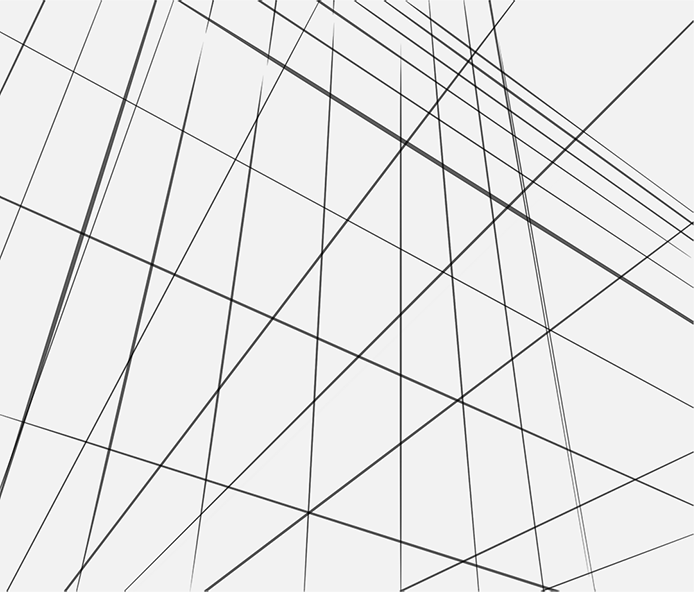
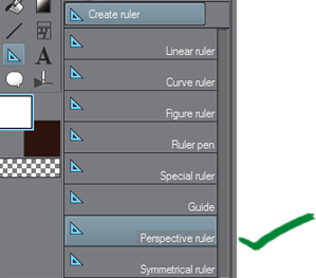
Use Clip Studio Paint's extremely handy Perspective Ruler tool for ease of establishing authentic guides. Yous can play effectually with dissimilar perspective ideas thanks to this tool considering information technology's very easy to utilise!
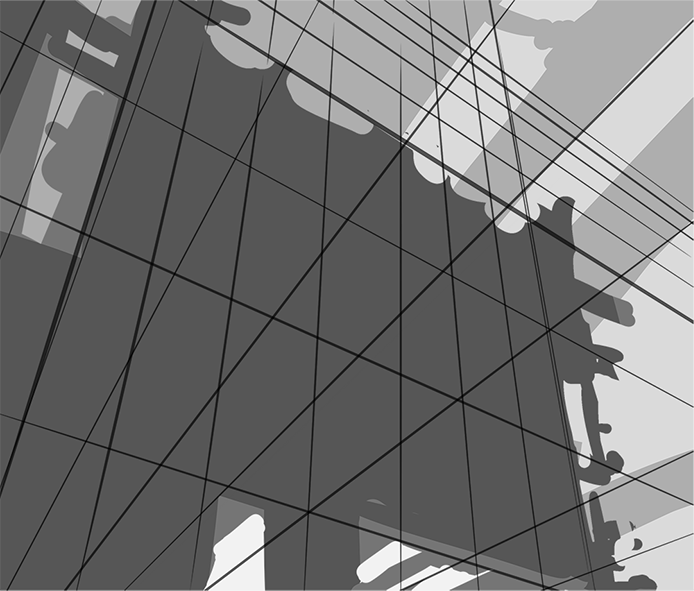
Draw the silhouette of the foreground (darkest), midground (mid-tone), and background (lightest). The shape doesn't take to be authentic because we are going to employ a photograph anyway.
For now, we merely want to illustrate our thought using elementary shapes.
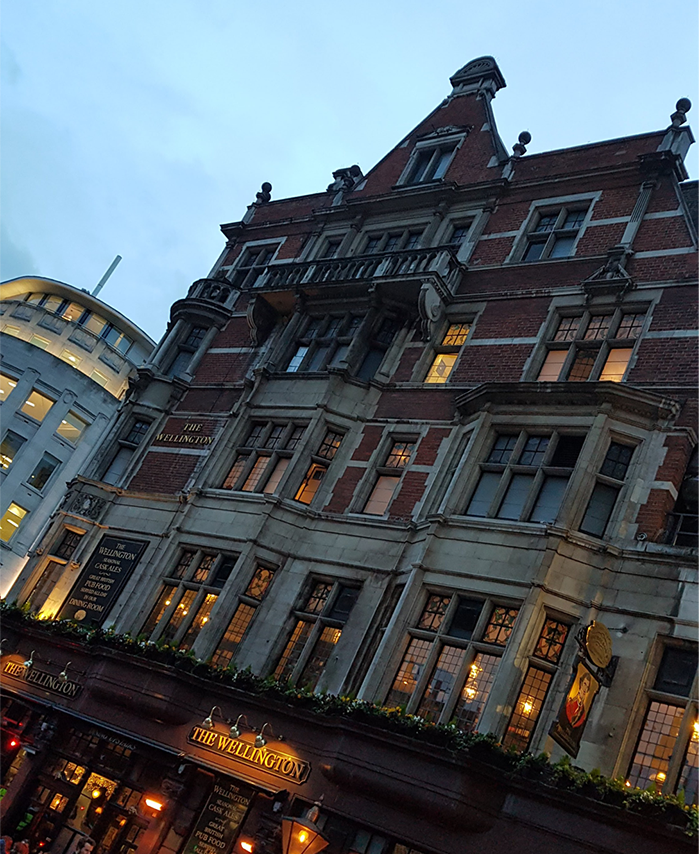
This is the photograph that nosotros volition be using for this tutorial. Make certain yous have the rights to/have permission to utilize the photograph(s).
Y'all can use as many photos as yous want depending on your scene, but for now, nosotros are going to use just this i for simplicity's sake.
Erase the unneeded stuff (like the heaven because we simply desire the building) using a combination of Eraser tools and Pick tools of your choice:
– Auto Select/Magic Wand
– Select > Select Color Gamut (Clip Studio Pigment)
– Select > Color Range (Photoshop)
You lot need patience for this footstep depending on how much y'all need to remove.
Re-create and paste the same building into the groundwork. Add a layer on summit then brush over some "fog" to push button it back to the groundwork. Add together some other layer on top of the foreground building and dab a bit of fog as well.
Painting "atmosphere" over your photo immediately reduces that stock photo look.
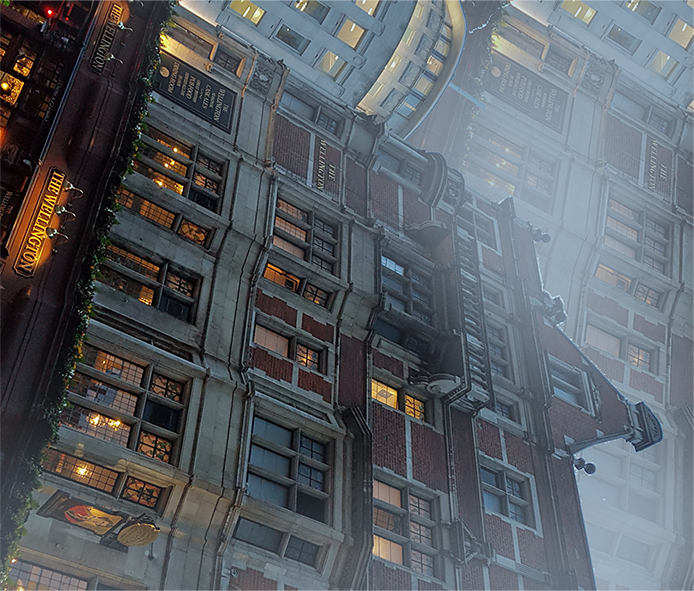
Change the grey block colors from earlier to blue to make the scene await cold, so set the blending fashion to Multiply.
Form the pillars by cutting and pasting, erasing unwanted parts, scaling, and rotating the edifice to brand it look like a thin structure.
Information technology doesn't have to be clean at this point. It's more of import to focus on the whole moving-picture show.
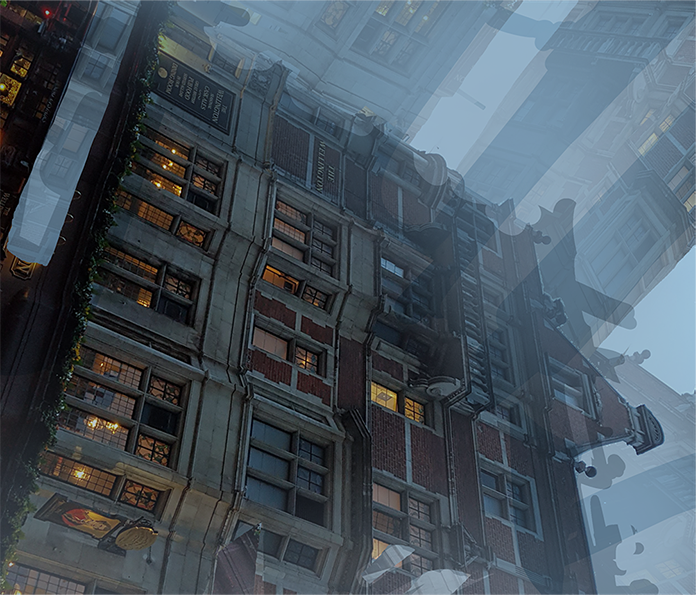
To focus on the whole motion-picture show:
1) Make sure to have the sheet zoomed out enough that you see the entire image
2) Have the Navigator window turned on so you can see the illustration at a thumbnail size
If the thumbnail looks good, at that place is a very high hazard that the full version looks good too. Zoom in simply when yous are rendering and adding tiny details.
If at that place are characters in the scene that are close enough to the camera to take up a practiced amount of space, draw them early on because they cast shadows and touch the limerick of a scene. They can crusade tangents against the groundwork if they are not positioned properly.
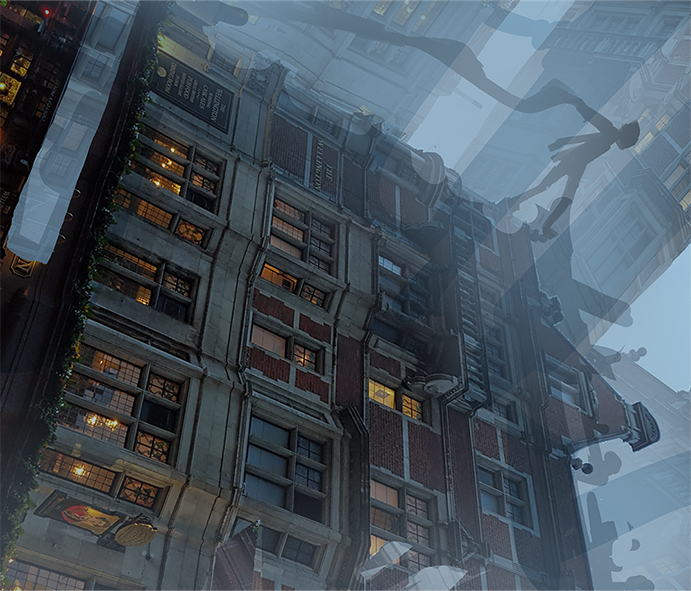
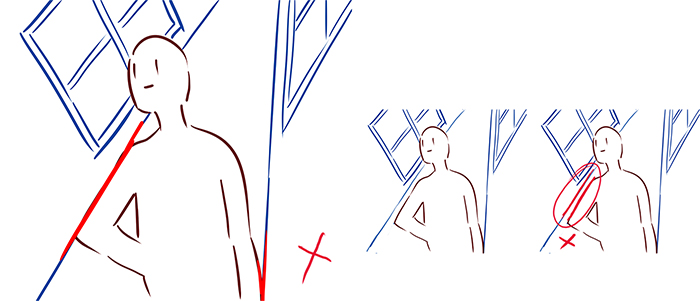
Tangents are a no-no.
Avoid this.
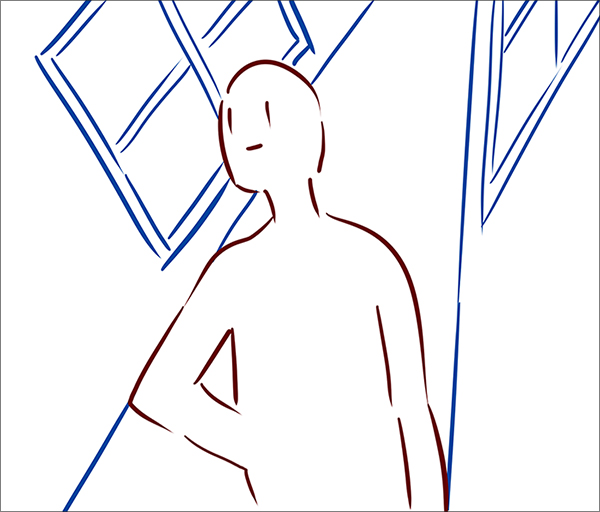
Lines of different objects that are overlapping or are parallel with each other are called "tangents" and must be avoided when drawing composition.
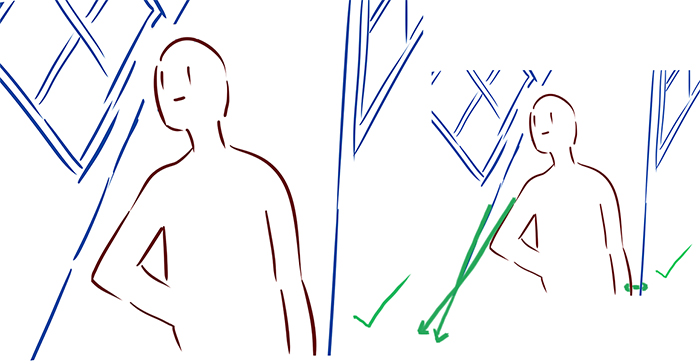
Instead of parallel lines, get for intersecting lines, and avoid lines that seem to merge with each other.
The Focal Point
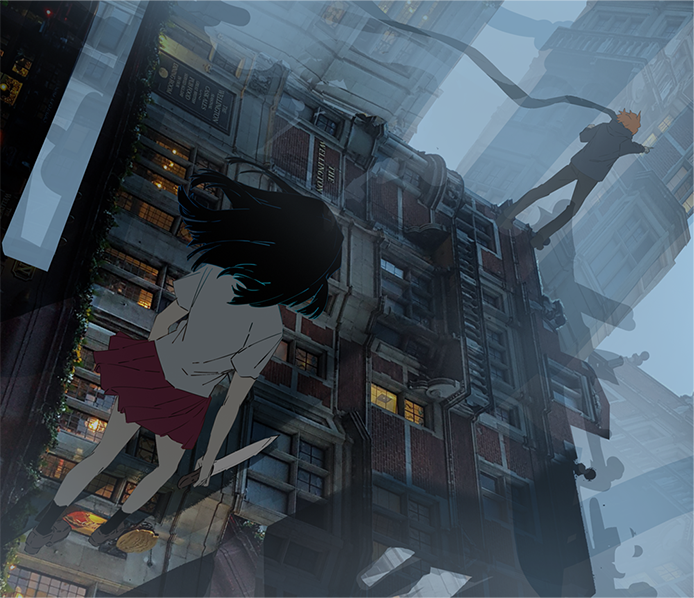
The guy is our focal point and making him stand up silhouetted against the lighter office of the background between 2 pillars helps our optics focus on him.
But notice how our eyes but slide away from focusing at him and proceed to expect at the building instead.
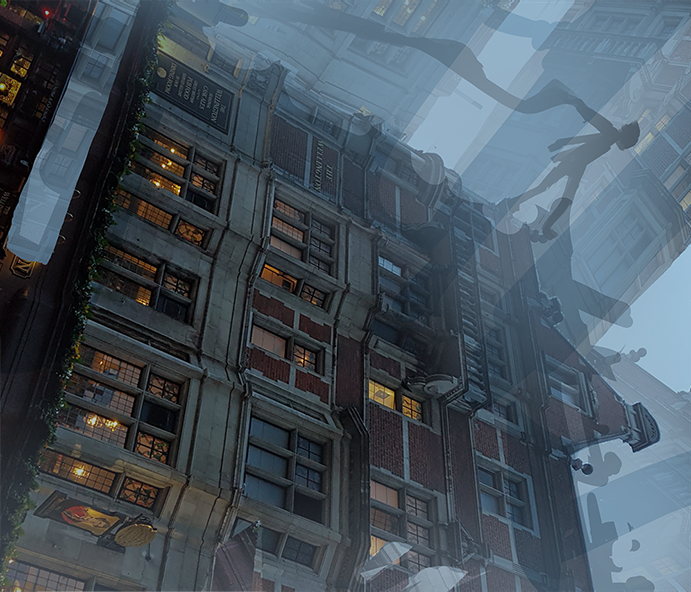
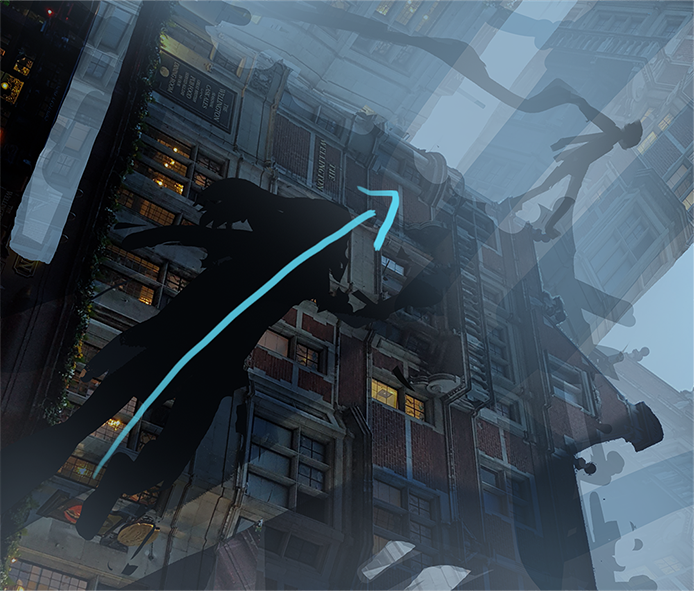
This is because the parallel lines of the edifice are 'leading lines' and homo eyes unconsciously follow them. These leading lines guide our eyes to expect towards the bottom half of the building.
Another reason is because the building has more than details than the focal signal, and people tend to look at detailed areas commencement.
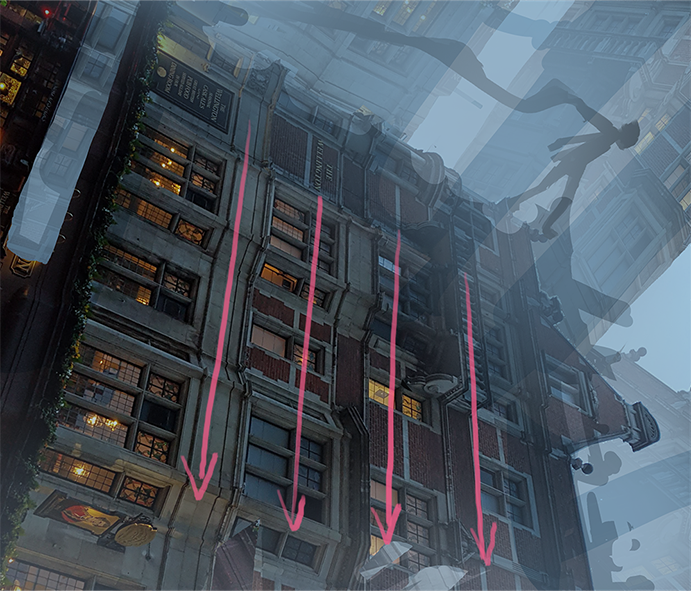
Strategically adding another graphic symbol or object helps prevent this problem.
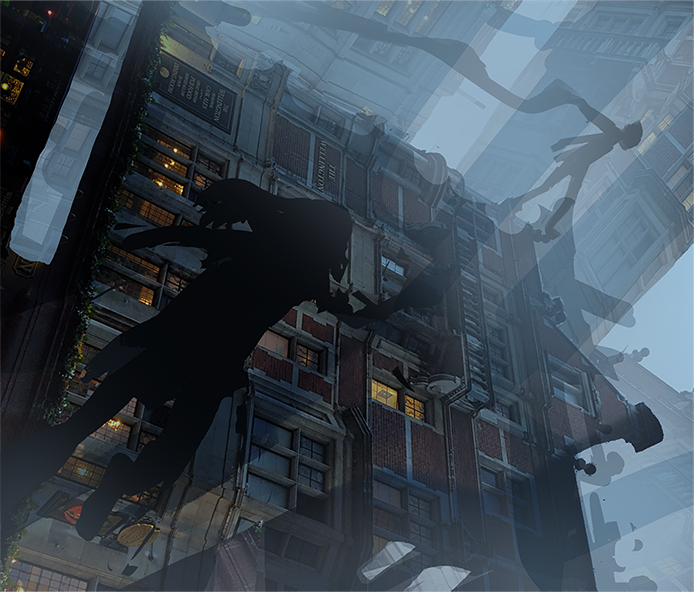
Make the object cutting through the building's leading lines to create a break.
This effectively stops the straight lines from leading our optics abroad from the focal point.
Nosotros tin can also do this without characters. They could be moss, they could exist birds flying in a different management, or they could fifty-fifty exist cleaved steel frames from the edifice itself.
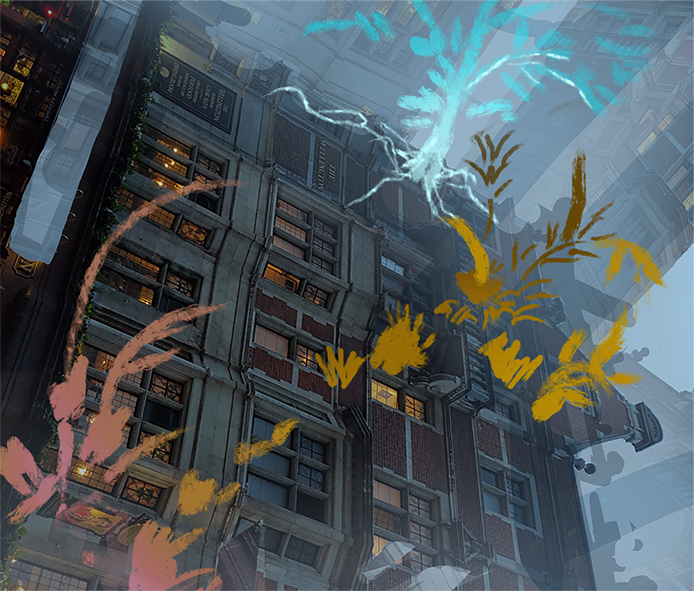
Simply drawing these "breaks" already helps a lot.
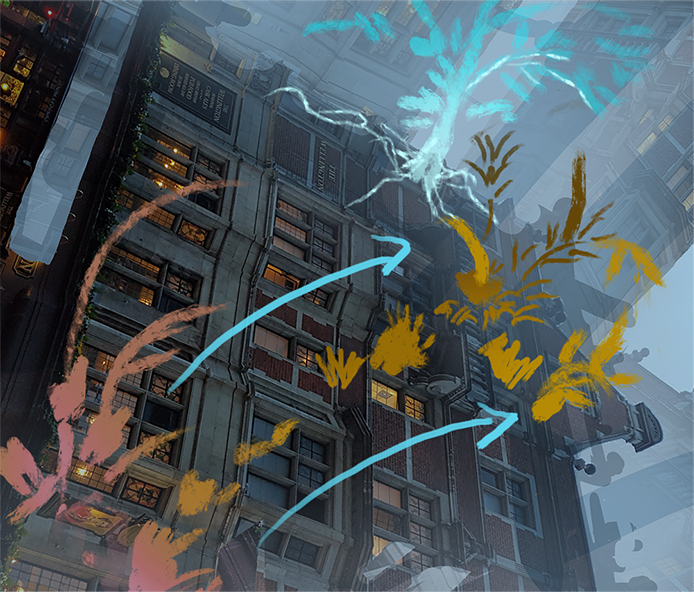
Deciding the character interaction
Now, think of a story. The story is what makes your pic stand up out from everyone else who has already used this same kind of concept. There is already a ton of art out in that location with buildings. Merely how tin you brand this art your own? Give it your ain twist. The story tin can be something simple, but the important part is that SOMETHING has to be happening in the image:
1) A guy and a girl are on an hazard. The guy is looking down in awe as the girl trails behind going.
"Await for me!"
Or she is running towards him to end him from jumping off depending on how y'all have it.
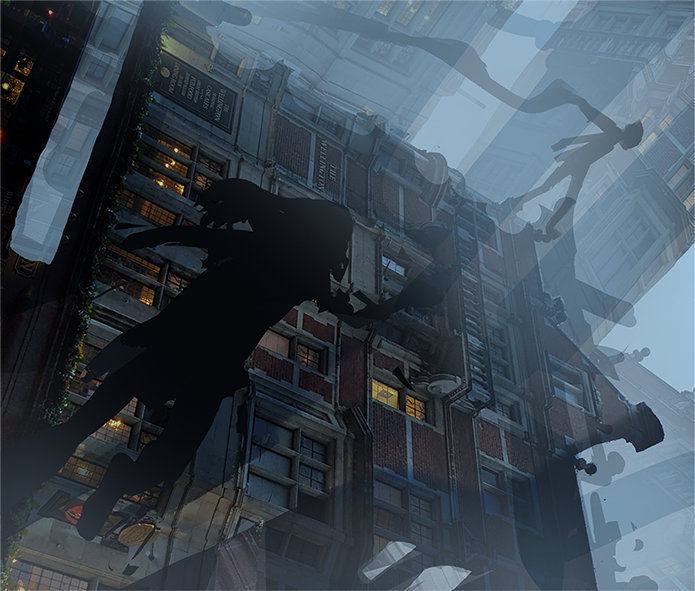
two) An action scene where the daughter jumps up (so her head pops on top of the edifice) and the guy prepares to receive the assail.
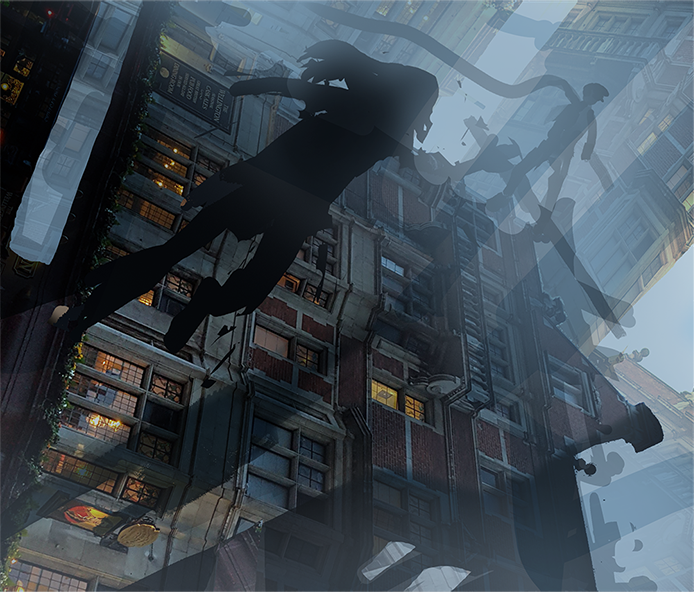
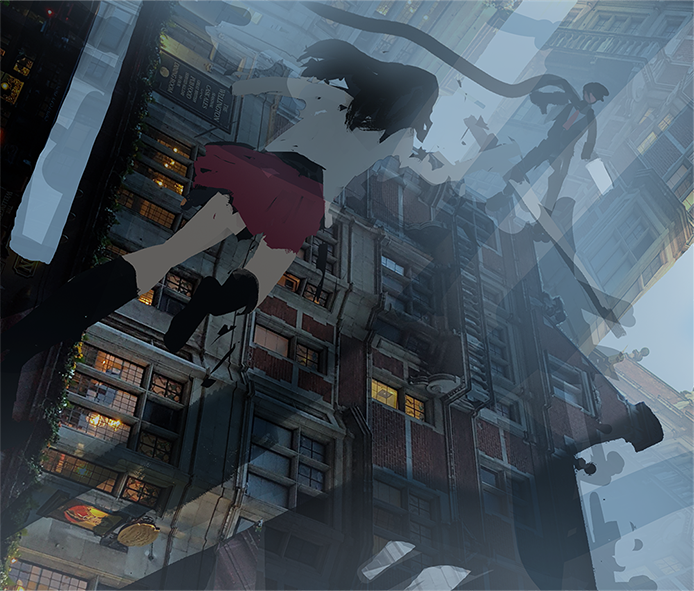
3) The girl slowly walking to backstab the unsuspecting guy. He is busy proverb, "Wow, look over there!"
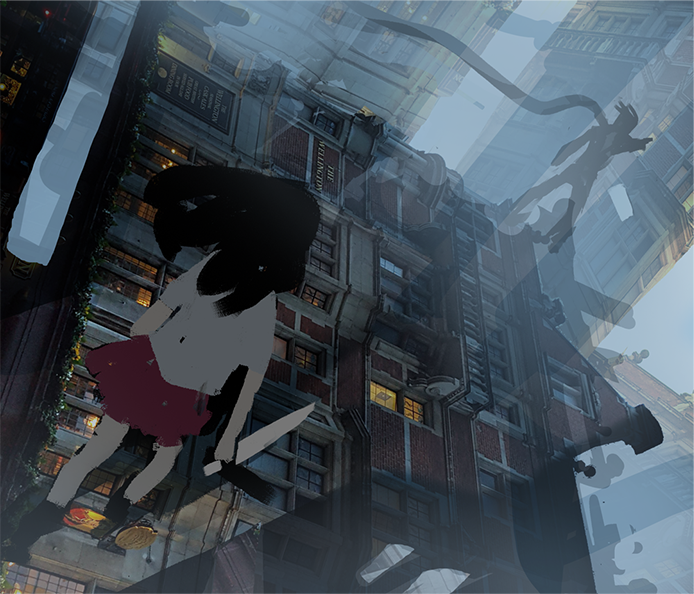
I leaned towards ii and 3, however ultimately decided to go with 3 to match the sinister lighting/setting.
– Add some yellows to show that the fourth dimension is sunset.
– Add cast shadows too to show that in that location are other buildings exterior the frame.
Photos accept their own lighting/shading. Intentionally drawing our own calorie-free and shadows helps get rid of the stock photo expect.
I cannot emphasize this enough:
Get rid of that stock photo look! The key to that is dramatic lighting.
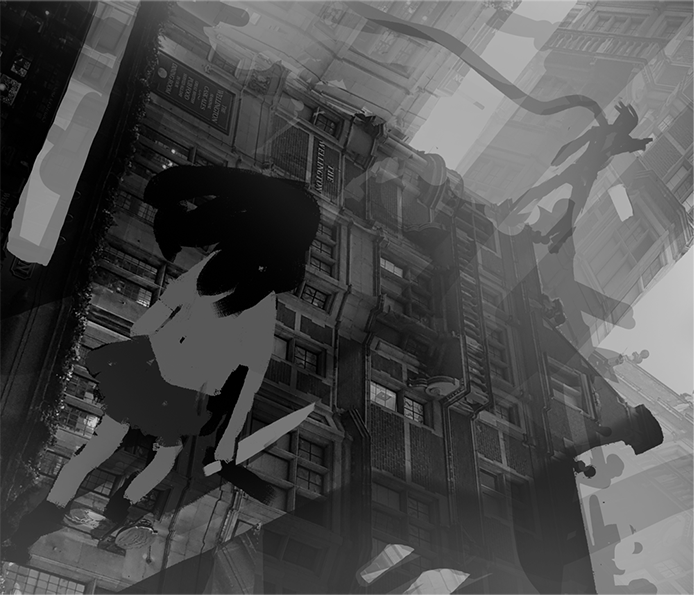
And with that, nosotros are done with the Establishing Phase. At present allow'southward check our values by making a new layer on top and setting it to Hue, then filling it with either blackness or white.
If we think that the major individual objects (Characters, foreground, and midground) properly stand out against their corresponding backgrounds instead of blending in, we tin can proceed with the Clean-up Stage.
Make clean-Up Stage
Cartoon the characters to terminate, I gave the guy grapheme orange hair to give variety and contrast against the bluish mist. Call back your complementary colors from grade school?
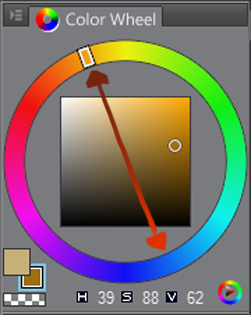
Complementary colors are also known as "contrary colors."
Fixing the shadows of the pillar buildings according to the calorie-free source. I also fixed the shape of the building a little bit. Then I added those small bridges to the left.
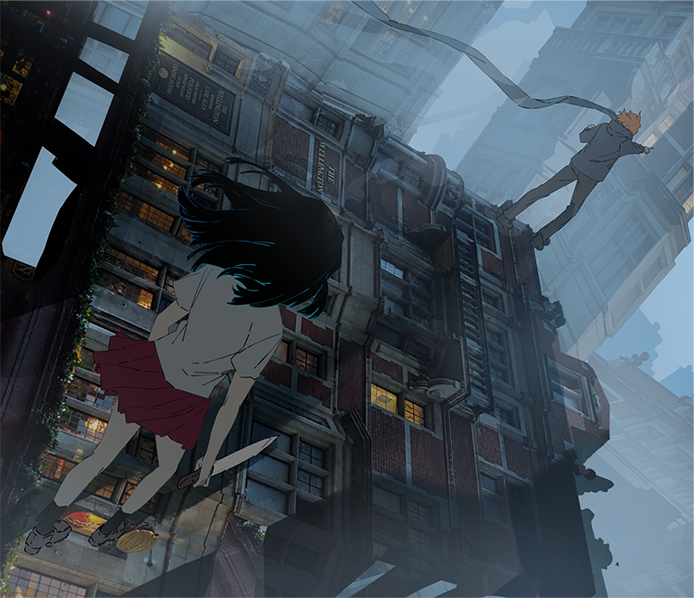
Corrected the girl'south cast shadow.
Overpaint Phase
The overpaint stage, a.k.a humanity's exam of patience.
Despite having a few photos alreadys, this stage can actually take the longest depending on how refined you want it to exist.
1) Original.
two) With the copy stamp tool and a pocket-sized brush size, carefully erase the leaves on the border of the building.
Clone from the correct surface area/colour. I didn't quite like the idea of life/growth, and so went for a scene that'due south just dry and dead.
3) Switch to a modest difficult brush to pigment over areas to complete the shapes (the yellow squares for example).
Endeavor not to lose the original textures from the photo when painting over. Practise this by using the eyedropper tool and carefully choosing surrounding colors just. Just use a modest castor size to paint. Painting with a big castor will cause colors to blend likewise much and smooth the textures out.
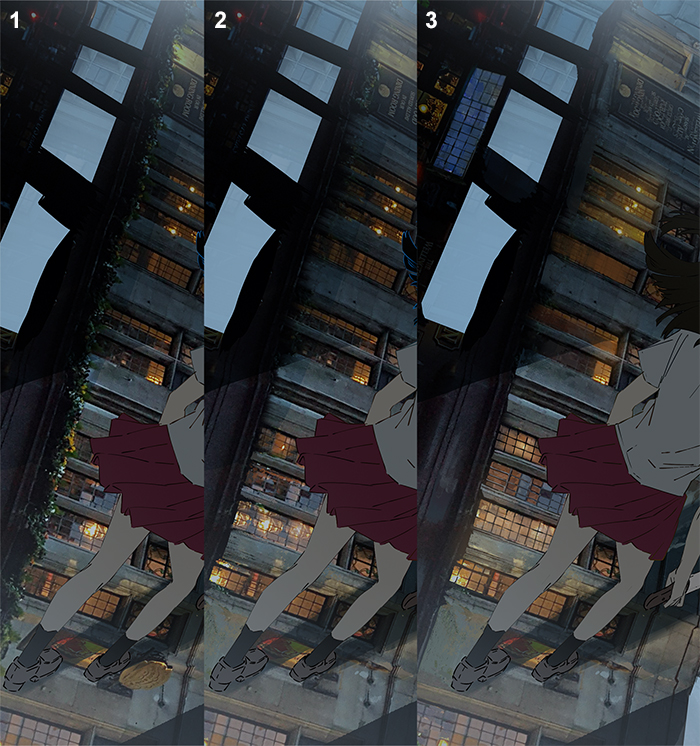
Yes, this part tin be tedious and requires a lot of patience, so yous can run into some matte paintings that are essentially only photobashing with very minimal painting.
Sometimes artists do this to testify ideas fast. Sometimes their clients want 100% photoreal images, so brush painting over a lot of areas is a bad idea. Then at that place are artists like Makoto Shinkai (Kimi no Na wa, Garden of Words, etc.) who choose to paint over every pixel of their photos.
Whatever the case, how refined yous want to go with your pigment-over depends entirely on you!
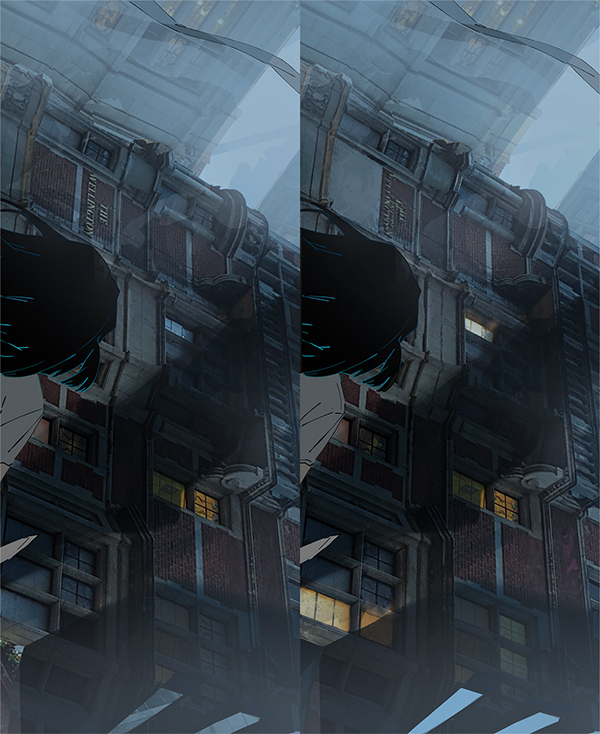
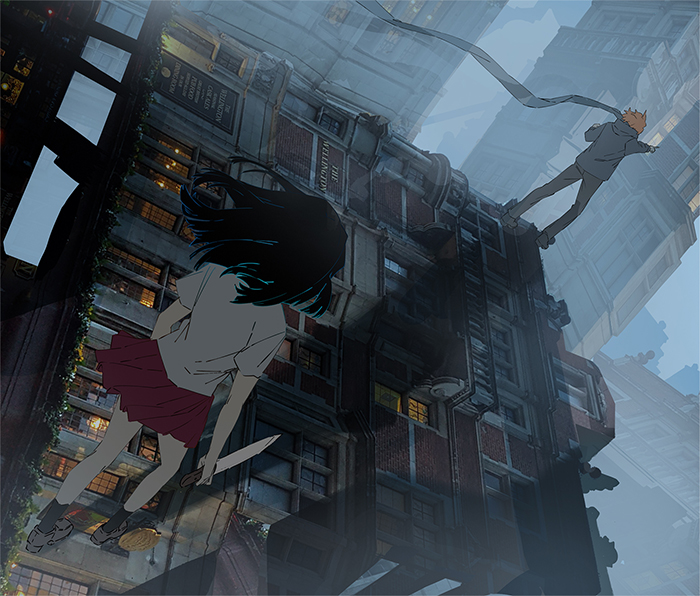
Before background overpaint:
With background overpaint:
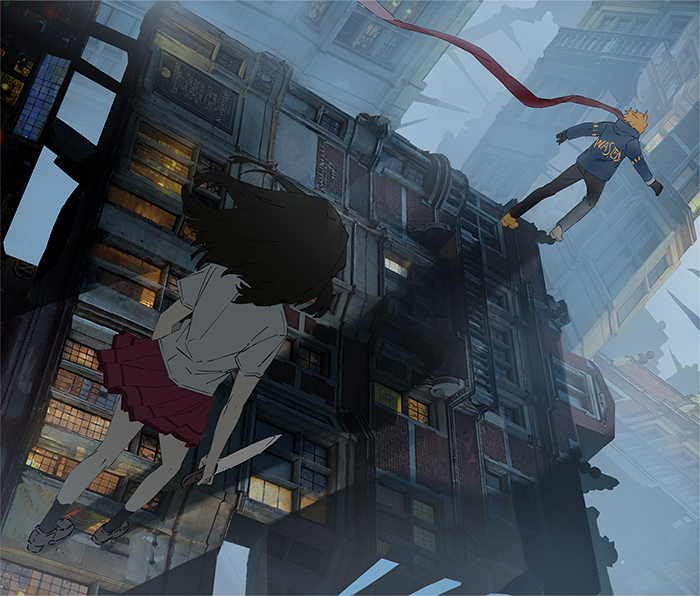
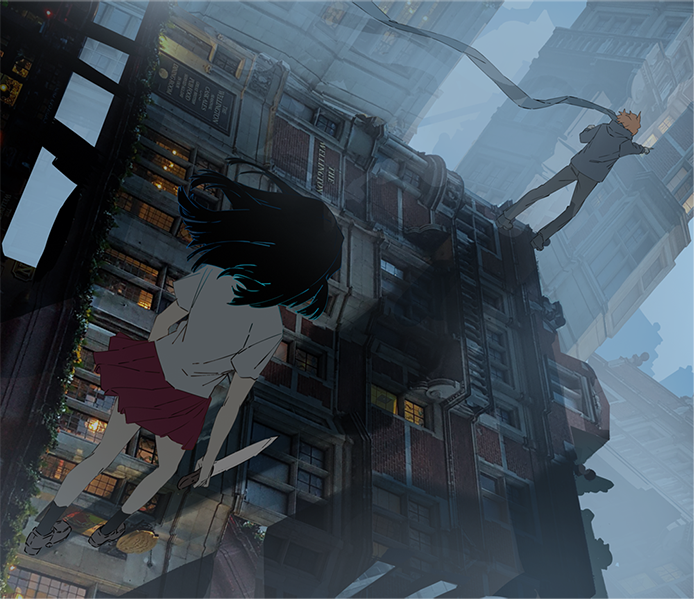
i) Made changes to the characters. I changed the guy's pose to make him look more like a homo even on a small-scale thumbnail view. Added more details to the girl, but removed the blues on her hair because it looked quite unnatural.
2) Slightly widened the gap between the buildings on top. Added those spiky structures in the background. Theses are not and so subtle leading lines that assist reinforce where the focal indicate is. I likewise adapted the girl's cast shadow in one case more so it goes straight to the guy.
3) Added more yellow lights to the correct of the image.
four) Overpainted mostly the left half of the edifice.
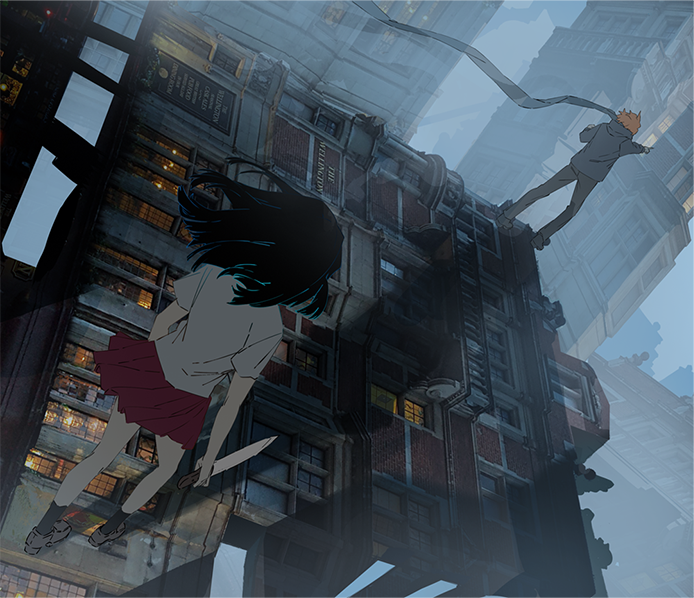
FINAL Prototype:
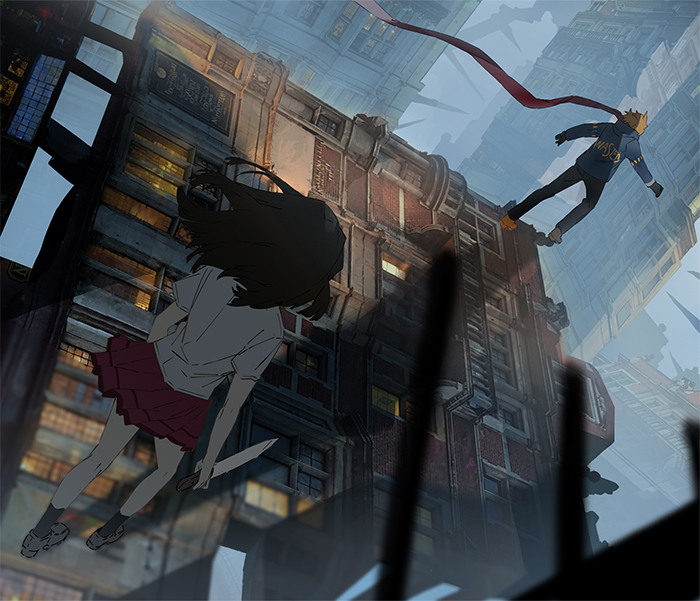
1) Copy and pasted the buildings in the background, and then scaled downwardly to brand the windows look smaller, thus making the building announced a bit further abroad.
ii) Added a construction on the foreground (still serving as leading lines to the guy).
three) Added blur on the foreground for that out of focus effect.
four) Added yellow tint beyond the edifice the characters are standing on.
v) Added dark shadows behind the guy graphic symbol.
And we're done!
Writer profile
Rynn (besides known as midorynn) is a self-taught artist who mainly uses digital tools and software such every bit Clip Studio Paint and Photoshop. Having worked five years on various freelance projects on animation, illustration, and design, she has learned a diversity of techniques and know-how that she is enthusiastic to share with other self-taught artists.
Twitter: https://twitter.com/rynn_apple
Instagram: https://www.instagram.com/rynn_apple/
Source: https://www.clipstudio.net/how-to-draw/archives/157725
0 Response to "A Girl Showing Her Backside Drawing With a Cool Background"
Post a Comment