How to Make Black and White Pop Art in Photoshop

Uncomplicated Pop Fine art Issue With Photoshop
In this Photoshop Furnishings tutorial, nosotros're going to encounter how to turn a photograph into a simple 1950'due south and 60'due south pop art-manner consequence. If you can make a pick with the Lasso tool and y'all understand the nuts of using layers in Photoshop, you take all the skills needed to create the effect. We're going to be using the Lasso tool, or the selection tool of your choice, a simple Threshold image adjustment, and a lot of solid color fill layers.
Best of all, when you're finished, all of the colors in the consequence remain completely editable, and so you can get back and change them any fourth dimension you desire, or brand multiple versions of the same prototype using different colors, which is a popular thing to do with this event.
Hither's the paradigm I'grand going to be working on throughout this tutorial:

And here's the pop art effect we're aiming for:
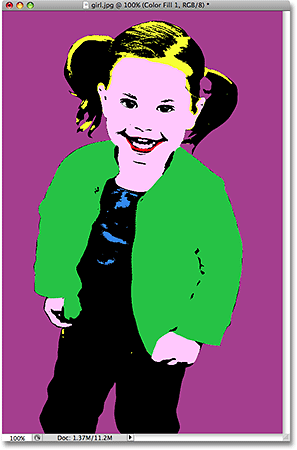
This tutorial is from our Photo Effects series. Let'southward become started!
Step ane: Draw A Choice Around The Main Subject area Of Your Photograph
In guild to create our pop art effect, we need the bailiwick of our image to be separated from its background and placed on its ain layer above the Groundwork layer, which means we need to first select the main field of study.
You lot can use any option tool you want here because yous don't have to be overly precise with your selection, since nosotros're going to exist removing virtually of the details from the prototype anyway. I used the Lasso tool, but if you adopt the Pen tool, for example, that works too. Become ahead and depict a selection around the primary subject of your photograph:

Describe a selection effectually the principal subject area of your photo using the selection tool of your selection.
Step ii: Copy The Master Subject Onto A New Layer
With the master subject of your photo selected, use the keyboard shortcut Ctrl+Alt+J (Win) / Command+Selection+J (Mac) to copy the pick onto its own layer. Calculation that Alt/Option key into the keyboard shortcut tells Photoshop to first give usa the New Layer dialog box so that we can name our layer before it'southward created:

Press "Ctrl+Alt+J" (Win) / "Command+Option+J" (Mac) to bring up Photoshop'south "New Layer" dialog box".
I named my new layer "threshold", and we'll see why in just a moment. Click OK when yous're done, and Photoshop copies your selection onto a new layer in a higher place the Background layer:

The choice now appears on its own layer above the Background layer.
Step iii: Add A Solid Colour Fill up Layer Below The New Layer
Now that nosotros have the main bailiwick on its own layer, we're going to hibernate the background from view and replace it with a solid colour. Showtime, click on the Background layer to select it. Then, with the Background layer selected, click on the New Make full Or Adjustment Layer icon at the bottom of the Layers palette:

Click the New Fill Or Adjustment Layer icon at the bottom of the Layers palette.
Nosotros want a solid color behind the primary subject area, then select Solid Color from the top of the list that appears:

Select "Solid Colour" from the height of the list.
This brings up Photoshop's Color Picker. Become ahead and choose whatsoever colour yous want right now for the background. It doesn't affair which colour yous pick because, every bit we'll see later, y'all can always get dorsum and choose a dissimilar color any time you want. I'm going to choose a low-cal blue for now:

Choose a colour for the groundwork with the Colour Picker.
Click OK when y'all've chosen a color to exit out of the Colour Picker. Here's my image with my solid colored background:

The main subject now on a solid colored background.
And I can now see in my Layers palette that I accept a solid color fill layer between my Background layer and the "threshold" layer:

A solid colour make full layer appears in the Layers palette.
Step 4: Apply The Threshold Adjustment To Remove The Detail From The Chief Subject
Next we need to convert the main subject field to black and white and remove most of the detail, and we can practice that easily using Photoshop's Threshold adjustment. First, click dorsum on the "threshold" layer to select information technology in the Layers palette. Then, go upwards to the Paradigm menu at the top of the screen, select Adjustments, and then select Threshold. This brings up the Threshold dialog box:

Photoshop'south "Threshold" dialog box.
Drag the slider at the lesser of the Threshold dialog box (circled in red in a higher place) until y'all've removed most of the details from the prototype, leaving just enough to still be able to make out the main areas. In my example, I've left just enough detail to still be able to make out the daughter's eyes, nose, mouth, so on, yet the majority of the image detail is now gone:

The paradigm subsequently applying the Threshold adjustment. Near of the detail is now gone.
Click OK when you're done to exit out of the Threshold adjustment.
Step 5: Select The Offset Surface area Of Your Subject To Colorize And Copy It To Its Own Layer
In society to create the pop fine art effect, we need to be able to colorize the different areas of our main subject separately from each other, and in gild to do that, nosotros demand to select each expanse and place it on its own layer. Again, using the Lasso tool or the selection tool of your choice, depict a selection around the showtime surface area of your main subject area that you want to colorize. I'm going to start with the girl'southward hair:
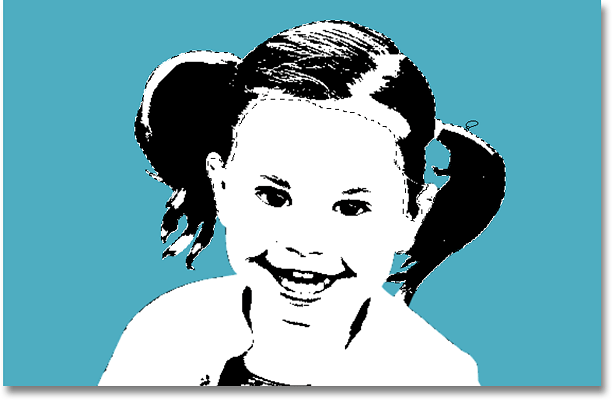
Selecting the girl'due south pilus with the Lasso tool.
Next, with her hair selected, I'grand going to copy her hair onto its own layer, using the same keyboard shortcut equally before, Ctrl+Alt+J (Win) / Control+Option+J (Mac), which brings upward the New Layer dialog box one time once again. Give this layer a descriptive name. I'm going to name mine "hair":

Requite your new layer a descriptive name.
Click OK, and Photoshop adds the selection onto its ain layer above the "threshold" layer:

The girl'due south hair is now copied onto its own layer to a higher place the "threshold" layer.
Step half dozen: Continue Selecting All Areas And Copying Them To New Layers
Continue making selections around each of the areas that you're going to want to colorize separately and copying each area onto its ain layer until yous're washed. Make sure you click back on the "threshold" layer each fourth dimension later you've fabricated a option, and then utilize the same keyboard shortcut, Ctrl+Alt+J (Win) / Control+Option+J (Mac) to re-create the option to its ain layer. Also, make sure you give the new layer a descriptive name.
I've gone ahead and made selections around each area of the daughter I'm going to want to colorize and I've copied each area onto its own layer in the Layers palette:

Continue selecting each area you desire to colorize and copying information technology to its own layer until you lot're done.
Footstep 7: Colorize Your Starting time Section With A Solid Color Fill up Layer
With each of the sections nosotros want to colorize selected and copied onto their own layer, the hard part is done. Nosotros're now at the fun and like shooting fish in a barrel part - colorizing each section. To do that, nosotros're going to requite each section its own solid color fill layer. I'm going to start at the very pinnacle of my Layers palette with the girl's hair.
First, I'm going to click on her "hair" layer in the Layers palette to select information technology. Then, I'm going to agree downwards my Alt (Win) / Selection (Mac) primal and click on the New Fill Or Adjustment Layer icon at the lesser of the Layers palette:

Hold down "Alt" (Win) / "Option" (Mac) and click the "New Fill Or Aligning Layer" icon.
Then, while however property Alt/Option, select Solid Colour from the meridian of the listing:

While still belongings Alt/Choice, select "Solid Colour" from the top of the listing.
Holding downwardly the Alt/Option key tells windows to bring up the New Layer icon for u.s.a. before calculation the solid color layer. Give your solid color layer a descriptive name. Since mine is going to exist used to colorize the daughter'due south pilus, I'1000 going to proper noun mine "hair colour".
As well, make certain yous select the Utilize Previous Layer To Create Clipping Mask option this fourth dimension:

Choose the "Use Previous Layer To Create Clipping Mask" selection to prevent the color from roofing the entire image.
If you don't select it, your solid colour will cover the unabridged image, which isn't what we want. Choosing this option volition make sure the color only fills the area inside the option, which in my case here is the girl's hair.
Click OK, and Photoshop's Color Picker appears. Again, cull whatsoever color you desire because you can go back and change it any time. I'thou going to choose orange for her hair, and then click OK.
I can now see my orange solid colour fill layer above the "pilus" layer in the Layers palette. It'south indented to the right and has a small down-pointing arrow on the left to point that it's existence "clipped" by the layer beneath it, preventing it from covering the unabridged prototype area:

The solid color make full layer now added above the "hair" layer.
Hither's what the daughter'southward hair currently looks like:

The girl's hair is now filled with orange.
Footstep viii: Change The Blend Mode Of The Solid Color Fill Layer To Multiply
Her hair is at present orange, but in that location's a problem. The orangish is covering all of the black areas that were in her hair. To fix that, with the orange fill color layer selected, get up to the layer blend mode options at the height of the Layers palette, click on the downward-pointing pointer to the right of the discussion "Normal", and modify the blend manner for the orange fill color layer to Multiply:

Change the alloy way of the make full color layer from "Normal" to "Multply".
At present the black areas in her hair are visible once again:

The black areas in her pilus are once once more visible.
Step 9: Keep Calculation Solid Color Fill Layers For Each Section
Repeat steps vii and 8, calculation solid color fill layers for each section, remembering each fourth dimension to select that Apply Previous Layer To Create Clipping Mask option in the New Layer dialog box so that your fill colour affects but that specific option and not the entire prototype. Once more, feel costless to pick any colors you desire for each section since you can always modify them. When you're done, you should have a solid colour fill layer in a higher place each section'southward layer in the Layers palette, and your paradigm will be completely colorized.
Remember that layers higher upwards in the Layers palette can block lower layers from view, then yous may accept to click and elevate some layers above others in order to colorize them if some sections in your image are overlapping.
Here's my image after adding a solid colour fill layer to each section and changing the blend mode of each one to "Multiply":
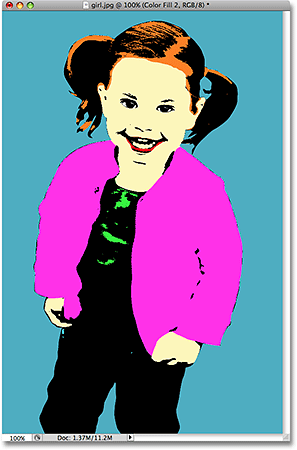
The prototype after adding a solid color make full layer to each section.
The pop art effect is now complete, and the nice thing is, I tin now become back and modify any colors I desire, as we'll see adjacent.
Step 10: Alter Any Colors You Want Whenever You Want
The overnice affair about the way nosotros've accomplished this effect is that each of our colors is a separate fill layer, and fill layers are always "live", meaning nosotros can go back and select different colors whatever time nosotros want. To change whatever of the colors, but double-click on the color swatch for that fill layer in the Layers palette:

To alter whatever of the colors, double-click on the color swatch icon for the fill color layer you want to modify.
This will bring the Color Picker back up. Choose a different colour, and so click OK. You can change any or all of the colors in the epitome whenever you want. I'll go alee and change all of the colors in my epitome.
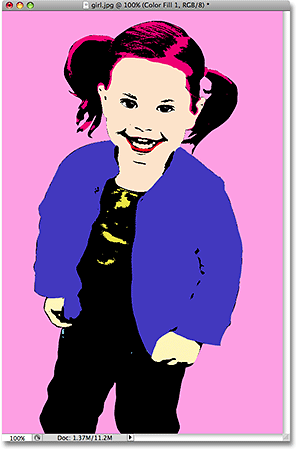
The aforementioned upshot using unlike colors.
[ ads - bottom - float - left ]
And once more, here'south the same image with unlike colors:
The same effect once once more with different colors.
Save your completed upshot as a Photoshop .PSD file and then that you tin can open up it again any time y'all need to and change the colors to create unlike results.
And in that location we have information technology! That's how to create a simple pop fine art consequence in Photoshop! Cheque out our Photo Effects section for more Photoshop effects tutorials!
Other Stuff
© 2022 Photoshop Essentials.com.
For inspiration, not duplication.
Site pattern by Steve Patterson.
Photoshop is a trademark of Adobe Systems Inc.
Source: https://www.photoshopessentials.com/photo-effects/pop-art/
0 Response to "How to Make Black and White Pop Art in Photoshop"
Post a Comment